In 2026, the global technology industry is undergoing a profound transformation from digitalization to intelligence. As core fundamental components for industrial automation, consumer electronics, new energy vehicles, data centers and other sectors, micro-motors and thermal cooling fans are embracing dual opportunities of technological innovation and market expansion. This report systematically analyzes the core trends, market size and application prospects of the industry’s development in 2026, providing a reference for enterprises’ strategic layout.
I. Market Size: Dual-Driven Growth with Sustained Expansion
(1) Micro-motors: A Hundred-Billion-Dollar Market with Steady Growth
The global micro-motor market size is projected to reach 115 billion US dollars (approximately 800 billion RMB) in 2026, with a 10.5% year-on-year growth. China’s market share will rise to 73%, making it the core engine of the global industry. China’s micro-motor market size is expected to exceed 240 billion RMB, with a Compound Annual Growth Rate (CAGR) of over 9.2% from 2026 to 2030, and is likely to break through 350 billion RMB by 2030.
Among segmented markets, automotive micro-motors register the most robust growth, with the market size set to hit 17.07 billion US dollars (approximately 120 billion RMB) in 2026 and rise to 21.97 billion US dollars by 2031, representing a CAGR of 5.2%. With the accelerated commercialization of humanoid robots, the unit price of coreless motors for their joint drive is more than 10 times that of traditional consumer electronics motors, emerging as a new high-margin blue ocean for the industry. Demand in the medical equipment sector grows steadily, contributing about 37% of the market increment, mainly for precision medical devices such as endoscopes, ventilators and rehabilitation robots.
(2) Thermal Cooling Fans: A High-Growth Track with Value Reassessment
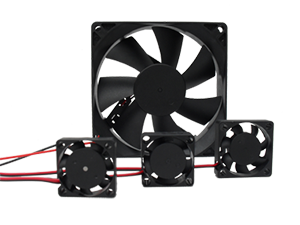
China’s thermal cooling fan industry is anticipated to reach a market size of 20.95 billion RMB in 2026, a 11.9% year-on-year increase, among which the share of Brushless DC (BLDC) fans will exceed 60% to become the market mainstream. The global radiator cooling fan market is expected to generate sales of 18.56 billion US dollars in 2026, with the Asia-Pacific region accounting for 47.8%. China has become the world’s manufacturing hub with an annual output of 4.23 billion units.
Liquid cooling thermal management for data centers and thermal management of three-electric systems in new energy vehicles have become the two major growth drivers. The penetration rate of liquid cooling systems in data centers will reach 23% in 2026, driving the market size of micro high-speed cooling motors up to 4.2 billion RMB, with the per-unit cooling value increased by 3 to 5 times. In the new energy vehicle sector, the share of new battery cooling designs reaches 21%; the number of cooling fans installed per vehicle rises from 2-3 units in traditional fuel vehicles to 5-8 units in new energy vehicles, pushing the market size above 6 billion RMB.
II. Core Drivers: Four Engines Reshaping the Industrial Landscape
(1) New Energy Vehicles: From Auxiliary to Core, Comprehensive Demand Upgrade
The commercialization of Level 3 and above autonomous driving has spurred an explosive demand for high-reliability micro-motors in steer-by-wire and brake-by-wire systems. The per-vehicle installation volume of micro-motors is set to jump from 20 units/vehicle to more than 30 units/vehicle, and is expected to exceed 50 units/vehicle by 2030. The popularization of 800V high-voltage platforms has promoted the application of Silicon Carbide (SiC) devices, imposing higher requirements on the insulation class and voltage resistance of micro-motors, and the integrated design of oil-cooled motors has become the technological mainstream.
(2) Artificial Intelligence: Soaring Computing Density and a Thermal Cooling Technology Revolution
The power consumption of AI servers has leaped from 5kW/cabinet to 20kW/cabinet, with the heat flux density exceeding 1000W/cm². Traditional air cooling is facing physical limits, and the hybrid liquid-air cooling architecture has become the standard configuration for data centers. High power density scenarios have spurred the application of ultra-high-speed BLDC fans (with a rotational speed of 30,000rpm) and magnetic levitation bearing technology, raising the system efficiency to over 85% and extending the service life to 100,000 hours.
(3) Humanoid Robots: Joint Drive, a New High-Value Track
2026 marks the first year of the commercialization of humanoid robots, with each robot requiring 20-40 micro-motors and imposing ultra-high requirements for high torque density, low noise and lightweight design. Coreless motors and ultrasonic motors have become the first choice for high-end robots due to their high power density and fast response characteristics, with a unit price of several thousand RMB, 5 to 20 times that of traditional motors.
(4) Green and Low-Carbon Development: Upgraded Energy Efficiency Standards and Higher Technical Barriers
The IE5 energy efficiency standards and the EU Ecodesign Directive have driven up the penetration rate of high-efficiency motors, with the market share of IE4 and above energy efficiency grade motors set to exceed 35% in 2026. BLDC motors, with an electric energy conversion efficiency of over 90%, are gradually replacing traditional brushed motors, and their market share is expected to surpass 40% by 2030. Life cycle carbon footprint accounting has become an industry access threshold, and the application of recycled materials and disassemblable design is boosting the industry’s sustainable development.
III. Technological Trends: Three Directions Leading Industrial Upgrading
(1) High Efficiency: From Efficiency Improvement to System Optimization
BLDC motors and Permanent Magnet Synchronous Motors (PMSM) have become the mainstream. Combined with Field-Oriented Control (FOC) sine wave control and wide bandgap semiconductor (GaN/SiC) technologies, the system efficiency is increased to over 85% and the torque ripple is reduced by 50%. The application of SiC devices has expanded the high-efficiency operation range of motors by 30%, and the full-range high-efficiency control algorithms realize the dynamic balance between energy consumption and performance.
(2) Miniaturization: From Millimeter to Micron Scale, Expanding Application Boundaries
The maturation of Micro-Electro-Mechanical Systems (MEMS) technology is driving the size of micro-motors toward the millimeter and micron scale, accelerating the expansion of ultra-precision application scenarios such as medical endoscopes and micro UAVs. The power density of coreless motors has exceeded 10kW/kg, making them the core components for the joint drive of humanoid robots. Their coreless structure reduces the moment of inertia and increases the response speed by 40%.
(3) Intelligentization: From Single Drive to Intelligent Actuation
The integrated design of “motor + drive + control + sensing” has become the mainstream. 42% of newly developed cooling fans integrate intelligent connectivity functions, supporting real-time IoT monitoring. AI algorithms enable predictive maintenance: through the multi-dimensional data collection of vibration, temperature, current and other indicators, fault early warning and life prediction are realized, increasing the product added value by 2 to 3 times.
IV. Application Prospects: Full-Scenario Penetration and Burst Growth in Segmented Markets
| Application Fields |
Core Demands |
Market Size Forecast |
Technological Directions |
| New Energy Vehicles |
High reliability, high efficiency, low noise |
Reaching 60 billion RMB by 2030 |
Oil-cooled motors, BLDC, SiC drive |
| Data Centers |
High rotational speed, high air pressure, intelligent speed regulation |
Reaching 4.2 billion RMB in 2026 |
Magnetic levitation bearings, liquid cooling fans, AI control |
| Humanoid Robots |
High torque density, lightweight, fast response |
Reaching 30 billion RMB by 2030 |
Coreless motors, servo control, integrated sensing |
| Medical Equipment |
Miniaturization, high precision, low electromagnetic interference |
Annual growth rate of over 20% |
MEMS micro-motors, brushless design, biocompatible materials |
| Smart Home |
Low power consumption, low noise, intelligent interconnection |
Reaching 50 billion RMB in 2026 |
EC motors, IoT integration, voice control |
V. Challenges and Opportunities: Strategies for Breaking the Dilemma and Winning the Future
(1) Core Challenges
- Technical Barriers: The localization rate of core components such as high-performance magnetic materials and precision encoders is less than 70%, restricting the development of high-end products.
- Cost Pressures: Price fluctuations of rare earth permanent magnet materials and rising costs of raw materials such as copper and aluminum have squeezed profit margins.
- Intensified Competition: Severe homogenization in the low-end market and price wars have driven the industry profit margin down to 5-8%.
- Standard Upgrading: Global energy efficiency standards are becoming increasingly stringent, and the IE5 standards and EU Ecodesign Directive have raised the industry access threshold.
(2) Opportunities for Breakthrough
- Technological Innovation: Focus on high-end products such as BLDC and coreless motors to enhance added value, with the profit margin reaching 15-25%.
- Industrial Integration: Improve economies of scale through mergers and acquisitions and build advantages in vertical integration.
- Service Transformation: Shift from single product supply to integrated solutions of “product + service + data”.
- Global Layout: Leverage China’s manufacturing advantages to expand into emerging markets such as Southeast Asia and Europe.
VI. Corporate Strategic Recommendations: Targeted Layout and Building Core Competitiveness
Facing the new development opportunities of the industry in 2026, enterprises should build their core competitiveness from the following four aspects:
- Technology Focus: Increase R&D investment, focus on the high-end development of BLDC, coreless motors and intelligent thermal cooling systems, and establish a three-in-one R&D system of “materials – algorithms – integration”.
- In-Depth Market Cultivation: Consolidate the two core tracks of new energy vehicles and data centers, and make an early layout in emerging fields such as humanoid robots and medical equipment.
- Green Transformation: Fully advance the R&D of IE5 high-efficiency products, construct a life cycle carbon footprint accounting system, and build a benchmark for green manufacturing.
- Ecological Collaboration: Strengthen cooperation with downstream OEMs, upstream core component enterprises and research institutions, and jointly build an open innovation platform.
Conclusion
2026 is a pivotal year for the micro-motor and thermal cooling fan industry to transform from “scale expansion” to “quality improvement”, with high efficiency, miniaturization and intelligentization becoming the main theme of the industry’s development. Only enterprises that keep pace with technological trends, deeply cultivate core markets and practice the green concept can seize the initiative in the new round of industrial transformation and achieve sustainable development.