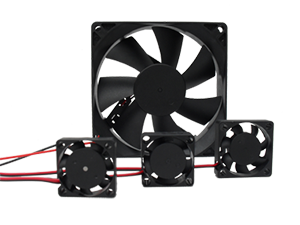
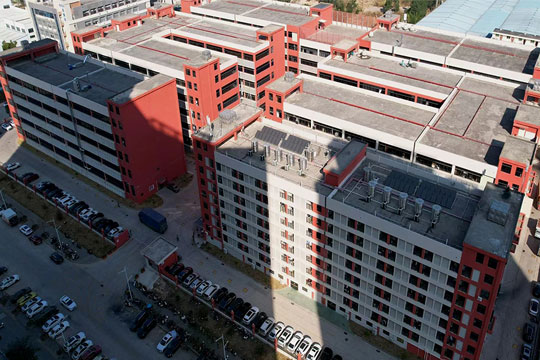
In 2026, the global manufacturing industry is accelerating its transformation towards intelligence and greenization. As core power components and key thermal management units, micro-motors and thermal cooling motors are ushering in a golden period of structural expansion. Driven by the coordinated demand from multiple fields such as new energy, artificial intelligence, and industrial automation, the industry structure is constantly reshaped, and at the same time, it has opened up a broad track for enterprises with core competitiveness. Based on in-depth research and judgment of industry trends and combined with the company’s development accumulation, this report will analyze the industry development trend in 2026 and clarify the company’s future strategic direction.
I. 2026 Industry Development Trend: Dual-Driven by Demand Explosion and Technological Upgrade
(1) Micro-Motors: Parallel Development of Scale Expansion and Structural Upgrade
China’s micro-motor industry is in a high-speed growth channel. After the market size exceeded 200 billion RMB in 2025, it is expected to climb to 224 billion RMB in 2026, maintaining a high year-on-year growth rate of over 10%. The compound annual growth rate is expected to reach 9.2% in the next five years, and the market size is likely to break through 350 billion RMB by 2030. This growth is not a simple scale expansion, but a structural growth driven by the reconstruction of application structure and the transformation of product high-endization.
From the demand side, new energy vehicles are the strongest growth engine. As the average installation volume of automotive micro-motors jumps from 20 units/vehicle to more than 30 units/vehicle, and is expected to exceed 50 units/vehicle by 2030, the automotive field will contribute a market size of over 60 billion RMB, covering core scenarios such as thermal management systems, electric door handles, and steer-by-wire chassis. At the same time, the smart home and service robot fields are showing an explosive trend, with a surge in demand for single products such as sweeping robots and intelligent lifting tables. Coupled with the demand for rehabilitation medical equipment driven by an aging society, the application boundary of micro-motors has penetrated from traditional consumer electronics to full scenarios. In the industrial field, the steady growth of manufacturing investment and high-tech manufacturing investment has promoted a significant increase in the application proportion of precision stepper motors and servo motors in industrial robots and CNC machine tools.
At the technical level, high efficiency, miniaturization, and intelligentization have become the core evolution directions. The penetration rate of Brushless DC (BLDC) motors continues to rise, with their sales volume accounting for more than 50%, and they are gradually replacing traditional brushed motors under policy promotion. The maturity of Micro-Electro-Mechanical Systems (MEMS) technology has driven the size of micro-motors towards the millimeter and micron scale, opening up ultra-precise application scenarios such as medical endoscopes and micro UAVs. The integrated design of “motor + drive + control” has become the mainstream, and intelligent execution units integrated with sensors and control algorithms have an added value of 2-3 times that of traditional motors, reshaping the industry value system. In addition, the increasing penetration rate of silicon carbide devices and the application of full-range high-efficiency control algorithms are further expanding the high-efficiency operation range of motors, promoting the industry’s transformation from “efficiency-oriented” to “synergistic optimization of system performance”.
(2) Thermal Cooling Motors: Growth Led by Green Energy Conservation and Scenario Segmentation
The thermal cooling motor industry is at the intersection of technological upgrading and demand reconstruction. The market size jumped from 14.7 billion RMB in 2021 to 29.8 billion RMB in 2025, with a compound annual growth rate of 18.3%. It will maintain a high growth trend in 2026, with core driving forces concentrated in three major fields: new energy vehicles, data centers, and industrial automation. The regional pattern shows a high degree of agglomeration, with the total production capacity of the Yangtze River Delta, Pearl River Delta, and Chengdu-Chongqing Economic Circle accounting for over 82%, forming industrial clusters with distinct characteristics and providing solid support for the industry’s development.
Differentiated scenario demands have spawned diversified technical routes. In the new energy vehicle field, Permanent Magnet Synchronous Motors (PMSM) dominate high-value scenarios with their high power density advantage, with a penetration rate of 63.8% in 2025. The efficiency of automotive oil-cooled thermal cooling motors is stably above 94.5%, and the noise is reduced to below 45dB(A), meeting the vehicle’s thermal management and comfort requirements. In the data center field, the penetration rate of liquid cooling systems has rapidly increased to 23%, driving the market size of micro high-speed thermal cooling motors up to 4.2 billion RMB. BLDC motors monopolize this scenario with an 81.2% market share, the overall machine efficiency reaches 89.7%, and integrate multi-dimensional sensing to achieve predictive maintenance. In the industrial and home appliance fields, driven by the mandatory upgrading of IE3 and above energy efficiency standards, the application of EC motors, magnesium alloy casings, and carbon fiber fan blades has achieved multiple breakthroughs in lightweight, mute, and energy conservation.
Green manufacturing and the “dual carbon” goal have become hard constraints for the industry. IE5 energy efficiency standards and full-life cycle carbon footprint accounting will gradually become access thresholds. The application of new materials such as high-performance neodymium-iron-boron grain boundary diffusion technology and ultra-thin silicon steel, as well as the construction of a closed-loop system for recycled materials, will promote the industry to break through the bottleneck of resource dependence while reducing carbon and energy consumption. It is expected that the comprehensive recovery rate of copper, aluminum, and rare earths will reach 85% by 2030.
II. Company’s Future Development Direction: Anchoring Trends and Building Core Competitiveness
Facing the new opportunities in the industry’s development, the company will base itself on its own technical accumulation and market resources, take “technology leadership, in-depth market cultivation, green empowerment, and ecological collaboration” as the strategic core, realize the transformation from a component supplier to an integrated solution service provider, and move forward steadily on the high-quality development track.
(1) Focus on Technological Innovation and Strengthen Product Barriers
Increase R&D investment and build a three-in-one technological R&D system of “materials – algorithms – integration”. In the field of micro-motors, focus on the high-end upgrading of BLDC motors and the development of intelligent execution units, tackle key technologies such as MEMS miniaturization technology, silicon carbide drive module integration, and multi-physics field collaborative optimization algorithms, and improve the adaptability of products in high-end scenarios such as new energy vehicle steer-by-wire chassis and humanoid robot joint drive. In the field of thermal cooling motors, deepen the technological iteration of PMSM and BLDC motors, optimize the design of oil-cooled/liquid-cooled thermal cooling structures, break through low-noise and vibration suppression technologies, and meet the refined needs of different scenarios.
Strengthen the independent controllability of core components. For bottleneck links such as high-performance magnetic materials and precision encoders, carry out industry-university-research collaborative research, establish material R&D laboratories in conjunction with universities and research institutions to reduce external dependence. At the same time, improve the patent layout, build a comprehensive patent matrix covering product design, manufacturing processes, and control algorithms, and enhance technical barriers.
(2) Deepen Core Markets and Expand Incremental Space
Consolidate existing advantageous scenarios, deepen strategic cooperation with new energy vehicle OEMs, data center integrators, and leading smart home enterprises, provide customized solutions for customers’ personalized needs, and enhance supply chain binding. Focus on emerging incremental scenarios such as new energy vehicle steer-by-wire chassis, humanoid robots, low-altitude aircraft, and medical precision equipment, lay out product R&D and market verification in advance, and seize the opportunity in the blue ocean market.
Optimize the market layout, rely on the advantages of the domestic “two cores and one belt” industrial cluster, strengthen the collaborative linkage between the Yangtze River Delta R&D center and the Pearl River Delta manufacturing base, and actively expand overseas markets to respond to the trend of global supply chain restructuring. Focus on laying out emerging and high-end markets such as Southeast Asia and Europe, increase the international market share, and build a global marketing network.
(3) Practice Green Concepts and Build a Sustainable Manufacturing System
Guided by the “dual carbon” goal, comprehensively promote the upgrading of green manufacturing. On the product side, give priority to the layout of IE5-level high-efficiency and energy-saving products, promote the application of recycled materials and disassemblable design, carry out full-life cycle carbon footprint accounting, and build a low-carbon product matrix. On the production side, upgrade green process equipment such as automatic winding and laser welding, optimize the energy consumption structure, improve production efficiency and product consistency, promote the transformation of factories towards intelligence and low carbonization, and realize energy conservation and emission reduction in the manufacturing process.
Establish a green collaborative mechanism for the supply chain, select upstream suppliers that meet green standards, promote the construction of raw material traceability and recycling systems, and build an entire-chain green supply chain from raw material procurement and production manufacturing to product recycling, demonstrating corporate social responsibility.
(4) Deepen Ecological Collaboration and Enhance the Position in the Value Chain
Break the single product supply model, transform to an integrated solution of “product + service + data”, provide customers with full-process services including motor selection, customized development, installation and commissioning, and operation and maintenance support, and enhance customer stickiness and value space. Strengthen ecological cooperation with downstream OEMs, upstream core component enterprises, and research institutions, jointly build an open innovation platform, participate in the formulation of industry standards, and promote technological collaboration and industrial upgrading.
Optimize the enterprise operation system, realize efficient collaboration in the whole process of R&D, production, marketing, and management through digital transformation, improve supply chain resilience and market response speed. At the same time, improve the talent training and incentive mechanism, attract high-end technical and management talents, and inject core motivation into the company’s sustainable development.
III. Conclusion
2026 is a crucial year for the high-quality development of the micro-motor and thermal cooling motor industry, with both opportunities and challenges. The company will seize the momentum, break through development bottlenecks through technological innovation, seize market opportunities through strategic layout, practice corporate social responsibility through green development, build differentiated competitive advantages in the wave of industry transformation, win-win with customers and partners, jointly promote industrial upgrading, and write a new chapter of intelligent and green development.